

The European economy is confronting an unyielding demographic reality. The retirement of its most experienced workforce cohorts has created an enduring structural labor deficit that standard immigration policies can no longer offset.
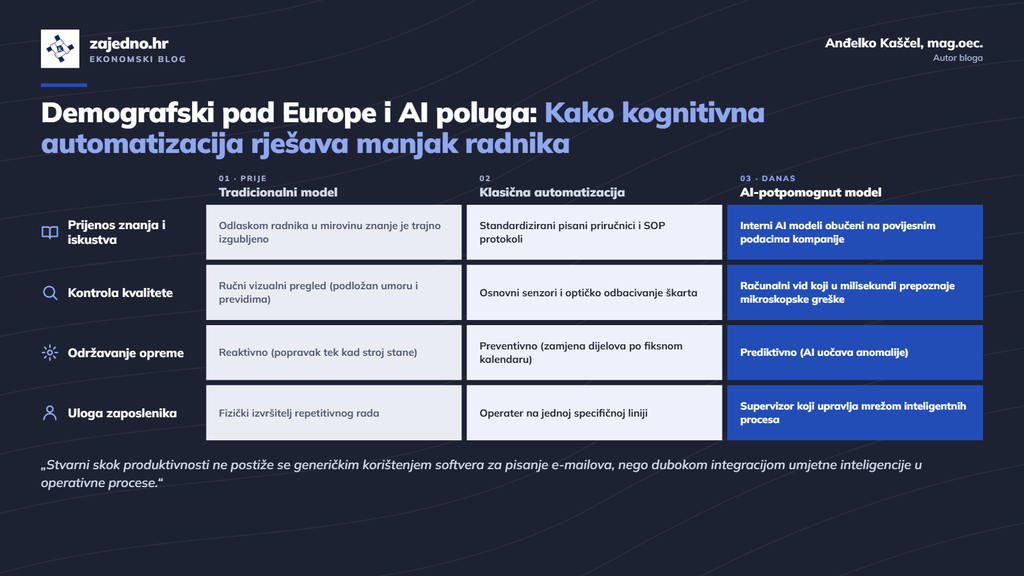
Upward wage pressure has decoupled from underlying output, compounding the strain on corporate competitiveness. In this operating climate, legacy robotic automation of purely manual tasks is no longer adequate. The most acute operational bottlenecks are now cognitive. The rapid loss of institutional engineering know-how as veteran staff retire, supply chain complexity and sluggish operational decision-making. A genuine leap in productivity will not come from adopting generic digital tools to draft emails, but from embedding artificial intelligence deeply into operational workflows. Deploying real-time computer vision for micro-defect detection, predictive maintenance that prevents machinery downtime and autonomous AI agents for procurement and inventory planning transforms each remaining worker into a high-leverage supervisor of intelligent systems.
A single engineer or technician equipped with operational AI can now oversee three times the throughput of previous cohorts. In an era where cheap labor is structurally extinct, industrial endurance depends entirely on offsetting the deficit of human hours with an exponential increase in value created per hour worked.