

Analyzing neighboring economies across our region highlights how structural productivity directly dictates wage capacity. A Slovenian worker produces $51.5 in economic value per hour, outperforming the Croatian average of $41.6 by nearly 24%.
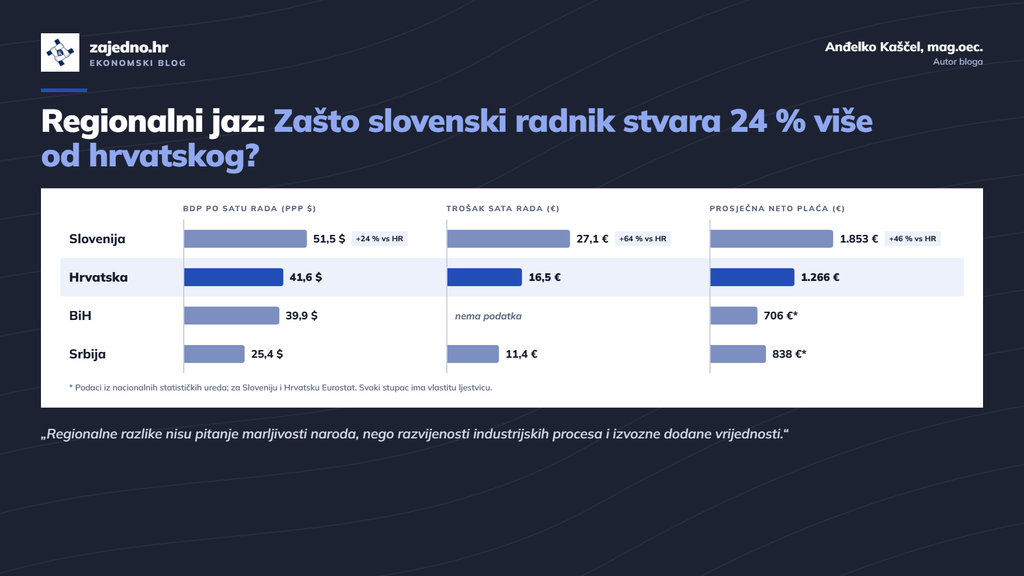
This distinct gap allows Slovenian employers to absorb an hourly labor cost of €27.1 while delivering average net wages exceeding €1,850. In Croatia, the total hourly employer cost stands at €16.5, supporting a net wage of approximately €1,266. Serbia trails significantly with $25.4 in hourly output and an €11.4 labor cost. Bosnia and Herzegovina generates an intriguing $39.9 per hour closely trailing Croatia, yet substantially lower wages point to informal economic friction and capital constraints.
Regional wage gaps are never driven by work ethic, but by high-margin manufacturing depth and industrial sophistication.