

The US elections on 3rd of November shifted the balance of power in Congress, and the new Congress takes office in early January 2027. Markets had largely expected this outcome. Tech indices in Asia first fell 3 to 4 percent and then partly recovered, while European stock markets opened higher. The yield on 10-year US Treasuries, which was above 5.2 percent in mid-October, fell below 4.9 percent as investors expect slower growth in government spending.
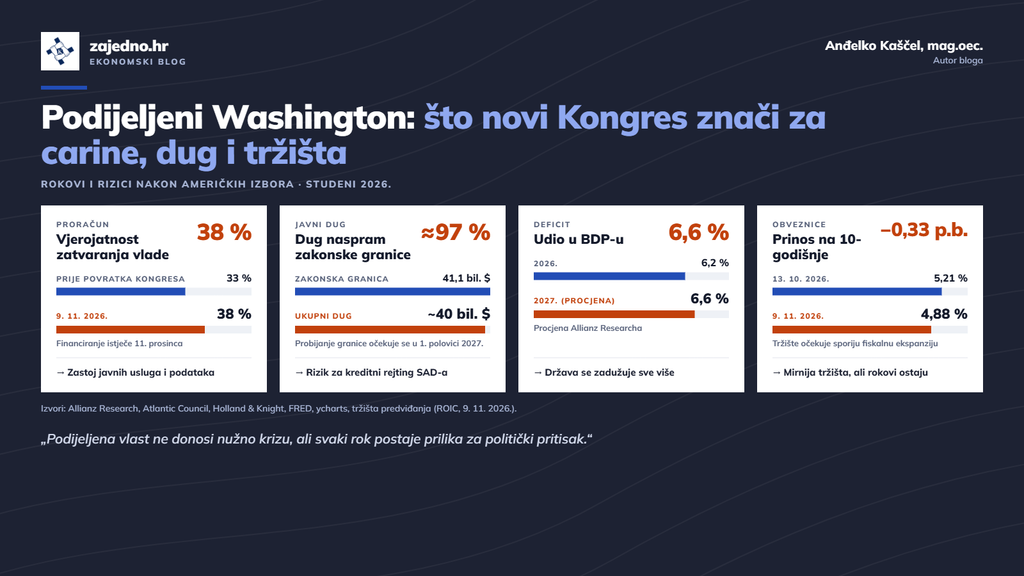
For the economy, the deadlines now matter more than the result itself. The outgoing Congress must fund the federal government by 11 December, or a new shutdown begins on 12 December. Prediction markets put the probability at 38 percent. The public debt ceiling of 41.1 trillion dollars could be breached in the first half of 2027, and Allianz expects the deficit to widen from 6.2 percent of GDP this year to 6.6 percent next year. Each of these deadlines becomes an opportunity for political pressure, and the uncertainty is paid for through a higher cost of US debt.
For European companies, what matters most is what will not change. Trade policy stays in the hands of the White House, and the president can veto attempts by Congress to soften it. Allianz expects the effective US tariff rate to reach about 8.5 percent by January 2027 because of new Section 301 tariffs. Exporters should therefore not count on cheaper access to the US market any time soon. They should plan for two years in which budget standoffs and debt deadlines move exchange rates, interest rates and demand more often.